Guides · Palm Coast, Florida
Palm Coast or Flagler Beach: Which to Visit
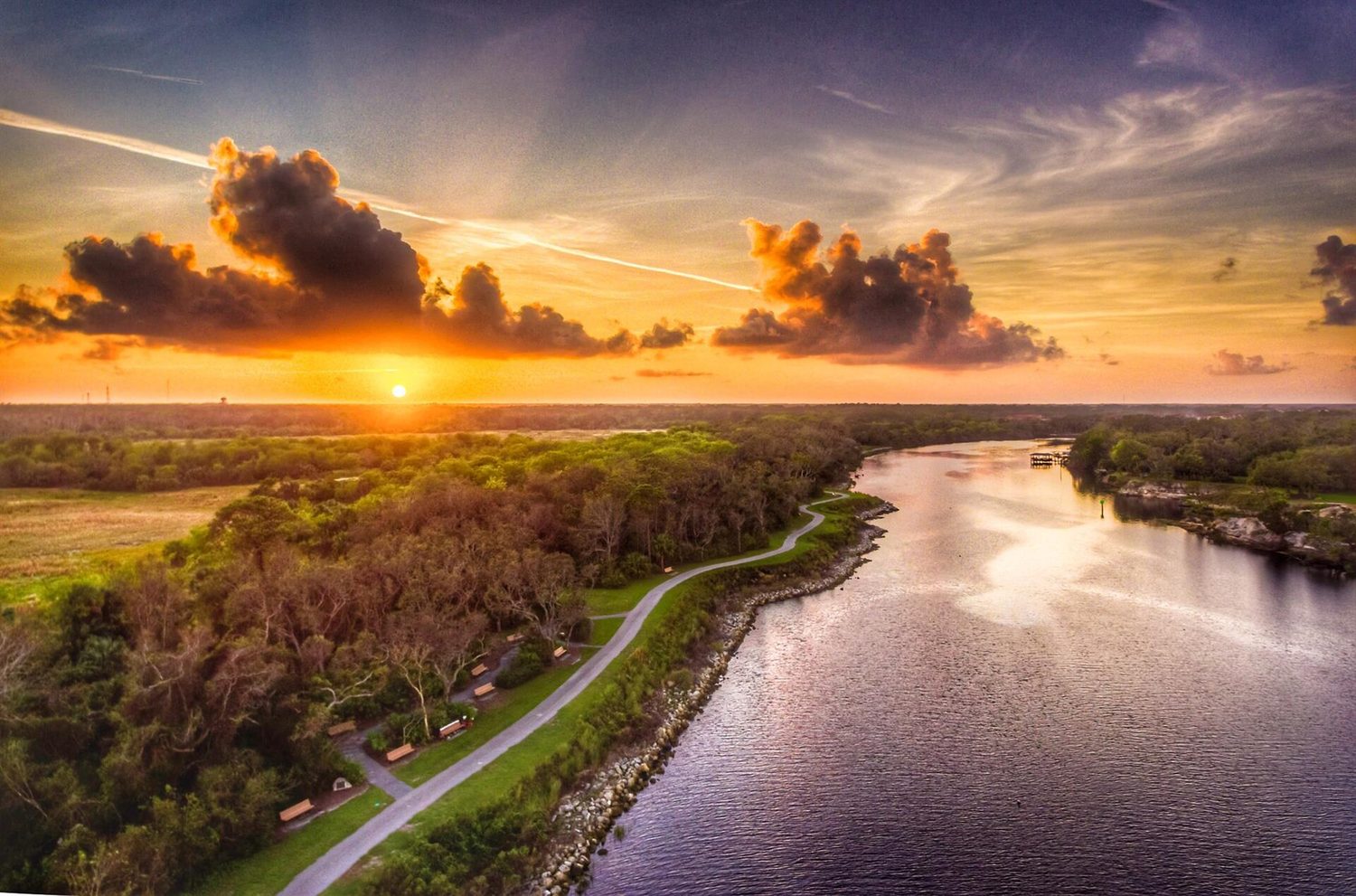
Palm Coast is a landscape built on a sales pitch, and its canals are the pitch made visible.
Palm Coast's Origins: A Planned Community
ITT Community Development Corporation created Palm Coast in 1969 and opened its welcome centre on 29 October 1970 — a date the city still keeps as Founder's Day. The name was the developer's, a product name for a planned community, not an inherited place name. Palm Coast did not incorporate until 31 December 1999. That thirty-year gap between welcome centre and cityhood is the whole story: sold first, populated second, governed last.
The land development was engineered at scale. ITT cut 46 miles of freshwater canals and 23 miles of saltwater canals to manage the water table and sell the lots. That makes Palm Coast one of the largest planned communities ever laid out in Florida, and one of the last to become a city. Every waterway, every curve of road, part of a master plan drawn before the first resident arrived.
The Canals: 69 Miles of Water You Can Actually Use
The canals are not decorative. They are the circulatory system of the town, and they are accessible. The 46 miles of freshwater canals wind inland, quiet and shaded, suitable for kayaking and paddleboarding at a slow pace. The 23 miles of saltwater canals connect to the Intracoastal Waterway, which means you can paddle from a residential backyard to the open water without touching a road.
The saltwater canals are the more interesting engineering feat — essentially man-made tidal estuaries, dug to keep the water table stable and to give every waterfront lot a boat dock. The practical effect for visitors is simple: water access is everywhere, and it is the point of the place.
How Palm Coast's Geography Shapes Your Visit
Palm Coast's eastern edge is the Intracoastal Waterway, which separates the mainland from the Hammock, a barrier island. The city's relationship to the ocean is filtered through this geography: you do not walk out of a downtown and onto a beach. Instead, you cross the waterway to reach the Hammock, where the shoreline is more natural, less developed, and less immediately welcoming.
This is the structural difference from a typical Florida beach town. The ocean is there, but indirect. The primary water experiences are the canals and the Intracoastal Waterway itself — boating, paddling, fishing — rather than surf and sand. Arrive expecting a beach at the end of every street, and you will be disappointed. Arrive expecting engineered water access, and you will find it in abundance.
Palm Coast Demographics: Who Lives Here Now
The census data paints a clear picture of who Palm Coast is for. The population is 94,362 people, with a median age of 50.8 years. Median household income is $71,840, and 28.8 percent of residents hold a bachelor's degree or higher. The median home value is $317,200, and the median gross rent is $1,747. The unemployment rate is 3.8 percent.
Housing tells the sharper story. There are 42,472 total housing units, of which 4,215 are vacant. Of the total, 2,766 units are held for seasonal or recreational use — about 6.5 percent of the housing stock. That is a town built for part-time residents and retirees, not for a young workforce or a transient rental market. The vacancy rate and the seasonal-use figure both suggest a place that still functions partly as a product: homes sold, sometimes occupied, sometimes not.
Palm Coast vs. Flagler Beach: Two Versions of the Same County
Flagler Beach, nine miles away, is the casual counterpoint. It is a beach town with a beach-town rhythm: First Friday events, a pier, surf shops, and a shoreline that is the entire point. Palm Coast is engineered, planned, and canal-centric. Flagler Beach is organic, scruffy, and ocean-centric.
For a day trip, the choice is simple. Want to walk on sand and feel the ocean? Go to Flagler Beach. Want to paddle calm water and see how a planned community actually works? Go to Palm Coast. They are close enough to do both in one day, but they appeal to different moods.
| Feature | Palm Coast | Flagler Beach |
|---|---|---|
| Primary water experience | Canals and Intracoastal Waterway | Ocean beach and pier |
| Town character | Planned, engineered, residential | Casual, organic, beach-town |
| Beach access | Indirect, via the Hammock | Direct and central |
| Best for | Kayaking, paddleboarding, boating | Surfing, sunbathing, walking the shore |
| Distance from each other | — | 9 miles |
How to Spend a Day in Palm Coast
Start with the freshwater canals. Rent a kayak or paddleboard and spend the morning on the quiet inland water, working your way toward the saltwater sections. By early afternoon, cross to the Intracoastal Waterway and explore the edge of the Hammock — the barrier island is worth seeing even if you do not plan to beach it. If you are there in 2026, the Creekside Music & Arts Festival at Princess Place Preserve runs a weekend, gates at 10am both days, marking its twentieth year. It is the town's main seasonal anchor: country music, art, and food in a natural setting.
Beyond the water, there is not much that is unique to Palm Coast. It is a residential town, not a destination town. The value is in the canals, the festival, and the proximity to Flagler Beach if you want the ocean afterward.
So, is Palm Coast worth visiting if you are not a resident or looking for a beach vacation? Yes, but only if you are interested in the canals and the engineered landscape. It is a place to paddle, not to sunbathe. And if you are comparing it to Flagler Beach for a day trip, the honest answer is that you should pick based on whether you want water you can navigate or water you can swim in. Both are valid. They are just different products.
Common questions
- When was Palm Coast founded?
- Palm Coast was created by ITT Community Development Corporation in 1969. The welcome centre opened on 29 October 1970, which the city still celebrates as Founder's Day. However, Palm Coast did not incorporate as a city until 31 December 1999.
- How many miles of canals are in Palm Coast?
- The developer cut 46 miles of freshwater canals and 23 miles of saltwater canals to manage the water table and sell lots. The saltwater canal network is part of the city's eastern edge along the Intracoastal Waterway.
- What is the median home value in Palm Coast?
- The median home value in Palm Coast is $317,200. Median gross rent is $1,747. The median household income is $71,840, and about 28.8 percent of residents hold a bachelor's degree or higher.
- How many people live in Palm Coast?
- Palm Coast has a population of 94,362 people. The median age is 50.8 years. There are 42,472 total housing units, of which 2,766 are held for seasonal or recreational use and 4,215 are vacant.
- Is Palm Coast a good place for a day trip from Flagler Beach?
- Yes, Flagler Beach is only 9 miles away. Palm Coast offers a different vibe—planned canals and quiet residential areas. Visit for the waterway views and the Creekside Music & Arts Festival at Princess Place Preserve, which celebrated its twentieth year in 2026.
- What is the unemployment rate in Palm Coast?
- The unemployment rate in Palm Coast is 3.8 percent. This is part of the city's economic profile, alongside a median household income of $71,840 and a median home value of $317,200.
Every business named above is one we hold a listing for, and every date traces to a source on our sources page. We do not describe menus, interiors or service we have not verified. Details change — confirm before you travel.