Guides · Palm Coast, Florida
Palm Coast Weather: Season-by-Season Guide
Palm Coast’s weather isn’t luck. It’s engineered—built alongside the lots, dug into the ground, and moderated by the coast.
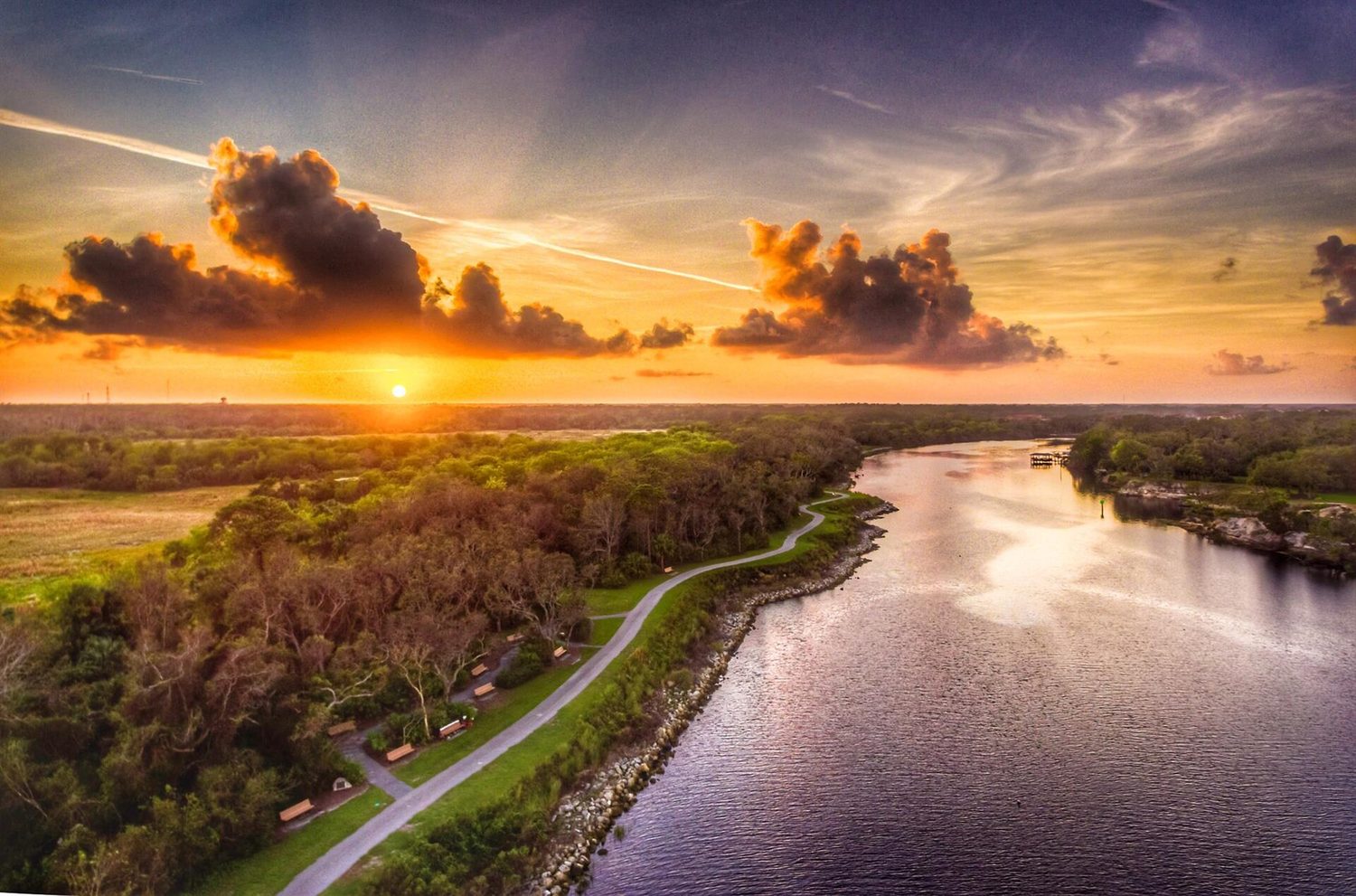
How Palm Coast's Canals Shape Its Weather
ITT cut 69 miles of canals—46 freshwater, 23 saltwater—to manage the water table and sell land. They also became part of the local atmosphere. Water absorbs heat slowly and releases it slowly, so the canal network buffers temperature swings. Nights near the waterways stay warmer in winter and cooler in summer than inland scrub. The canals drain stormwater quickly, which is why a heavy August downpour can flood a street temporarily but rarely sits for days. The Intracoastal Waterway marks the eastern edge, adding maritime humidity and moderating extremes. Residents feel the difference: the air is wetter, the breezes steadier, and the land less dusty than the pine flatwoods further west.
Summer: The Rain Machine
June through September runs on a predictable rhythm. Mornings are hot and humid, with heat indexes often climbing past 100°F by noon. By mid-afternoon, the sea breeze collides with inland heating, triggering near-daily thunderstorms that roll in from the west. Rain is intense but short—typically 30 to 45 minutes—and the canals absorb the runoff. The Intracoastal Waterway can get choppy during these squalls, and the saltwater canals, being tidal, may rise quickly. This is not gentle weather. It is engineered land meeting a tropical air mass.
Fall: The Transition Months
October and November bring the first real relief. Humidity drops, highs settle into the upper 70s and low 80s, and overnight lows dip into the 60s. This is also the peak of hurricane season, with September and October historically carrying the highest risk of tropical systems. The canals, designed for drainage, become a liability during storm surge—saltwater can back up into freshwater sections. The seasonal marker here is the Creekside Music & Arts Festival at Princess Place Preserve, whose 2026 edition marked its twentieth year. It is a weekend of country music and art, gates at 10am both days, and it signals that summer’s grip has loosened.
Winter: The Snowbird Calculus
December through February is mild and dry. Highs average near 70°F, nights fall to the 40s and 50s, and rain is sporadic. This is why the census counts 2,766 homes held for seasonal or recreational use out of 42,472 total housing units—a small but visible slice of the housing stock that fills between Thanksgiving and Easter. The median age is 50.8 years, and the median household income is $71,840, which fits a retired or semi-retired pattern. Winter residents come for the lack of frost, not for heat. It is comfortable enough for golf, boating, and sitting on a dock, but too cool for swimming without a wetsuit.
Spring: The Dry Window
March through May is the best weather Palm Coast offers. Humidity stays moderate, highs range from the mid-70s to mid-80s, and rain is infrequent. The canals are at their most benign—water levels steady, breezes from the east, and no thunderstorm clock ticking. This is the season for the Intracoastal Waterway, for kayaking the saltwater cuts, and for planning outdoor work. It is also the short window before June’s humidity returns. If you want to visit for good weather, aim for April or early May.
How Weather Defines Palm Coast's Identity
Palm Coast was a product before it was a place. ITT created the name, dug the canals, and opened its welcome centre on 29 October 1970—a date still kept as Founder’s Day. The city did not incorporate until 31 December 1999, three decades later. That slow build is reflected in the climate: the canals were dug first, the weather understood second, and the population followed. Today, 94,362 people live here, with a median home value of $317,200 and a 3.8 percent unemployment rate. The weather is the original sales pitch, but it is an engineered one—moderated by water, drained by ditches, and shaped by a coastline. It is not generic Florida sunshine. It is a microclimate with a design history.
| Season | What to Expect |
|---|---|
| Summer | Near-daily afternoon thunderstorms, high humidity, heat indexes over 100°F, short but heavy rain |
| Fall | Cooling temperatures, lower humidity, peak hurricane risk, the Creekside Music & Arts Festival |
| Winter | Mild highs near 70°F, cool nights in the 40s–50s, dry spells, seasonal residents present |
| Spring | Best weather: moderate humidity, highs in the 70s–80s, infrequent rain, calm canals |
For hurricane season, know that Palm Coast sits on the Intracoastal Waterway, not the open Atlantic, but the saltwater canals are tidal and can surge. Flood risk is real but localized; the drainage system works, yet it has limits. Check tide charts before any boating, and treat summer afternoons as a hard stop. The best time to visit is spring, specifically April to early May, when the weather is dry, warm, and not yet oppressive. Winter is pleasant but busier with seasonal residents. Fall is transitional and storm-aware. Summer is for those who do not mind rain.
Common questions
- When was Palm Coast founded?
- Palm Coast was created by ITT Community Development Corporation in 1969, with its welcome centre opening on 29 October 1970. That date is still celebrated as Founder's Day. The city didn't incorporate until 31 December 1999, making it one of Florida's last planned communities to become a city.
- Why is it called Palm Coast?
- The name was the developer's product name for the planned community, not an inherited place name. ITT chose it to market the lots, and it stuck. The town was designed and built from scratch, starting with 69 miles of canals dug before anyone lived there.
- How many canals are in Palm Coast?
- ITT cut 46 miles of freshwater canals and 23 miles of saltwater canals to manage the water table and sell lots. That's 69 miles total, dug before any residents arrived. The saltwater network connects to the Intracoastal Waterway, which forms the city's eastern edge.
- What's the population and median age?
- Palm Coast has 94,362 people with a median age of 50.8 years. Median household income is $71,840, and the unemployment rate is 3.8%. About 28.8% of residents hold a bachelor's degree or higher.
- Are there many vacation homes here?
- Out of 42,472 total housing units, 2,766 are held for seasonal or recreational use. That's about 6.5%. There are also 4,215 vacant units, which is roughly 10% of the housing stock. Median home value is $317,200, and median gross rent is $1,747.
- What's the Creekside Music & Arts Festival?
- It's a weekend of country music, art, and food at Princess Place Preserve, with gates opening at 10am both days. The 2026 edition marked its twentieth year. It's one of the city's key annual events, though it's not tied to any specific season.
Every business named above is one we hold a listing for, and every date traces to a source on our sources page. We do not describe menus, interiors or service we have not verified. Details change — confirm before you travel.