Guides · Palm Coast, Florida
Why Palm Coast Is Where It Is
Palm Coast is not a place that grew into a name; it is a name that was engineered into a place, and the engineering is the story.
A Product, Not a Town
In 1969, ITT Community Development Corporation began carving a city out of Flagler County’s pine flatwoods. The name was chosen the way a manufacturer chooses a brand: Palm Coast was a product label, not an inherited title. There was no pioneer family, no railroad stop, no citrus baron to honor. Just a developer with a grid and a water table to manage.
The welcome centre opened on 29 October 1970. That date still matters. Palm Coast celebrates it as Founder’s Day, which is a curious thing for a city that did not legally exist for another three decades. The town was a sales pitch before it was a municipality. It took thirty years from that first open door to incorporation on 31 December 1999.
That lag is the defining fact. Palm Coast was one of the largest planned communities ever laid out in Florida, and one of the last to become a city. For most of its early life, it was unincorporated land with a marketing department.
The Canals Are the Skeleton
You cannot understand Palm Coast without understanding drainage. ITT cut 46 miles of freshwater canals and 23 miles of saltwater canals before the first residents arrived. This was not decorative waterfront. It was infrastructure: a way to lower the water table, move stormwater, and turn swampy lots into sellable parcels.
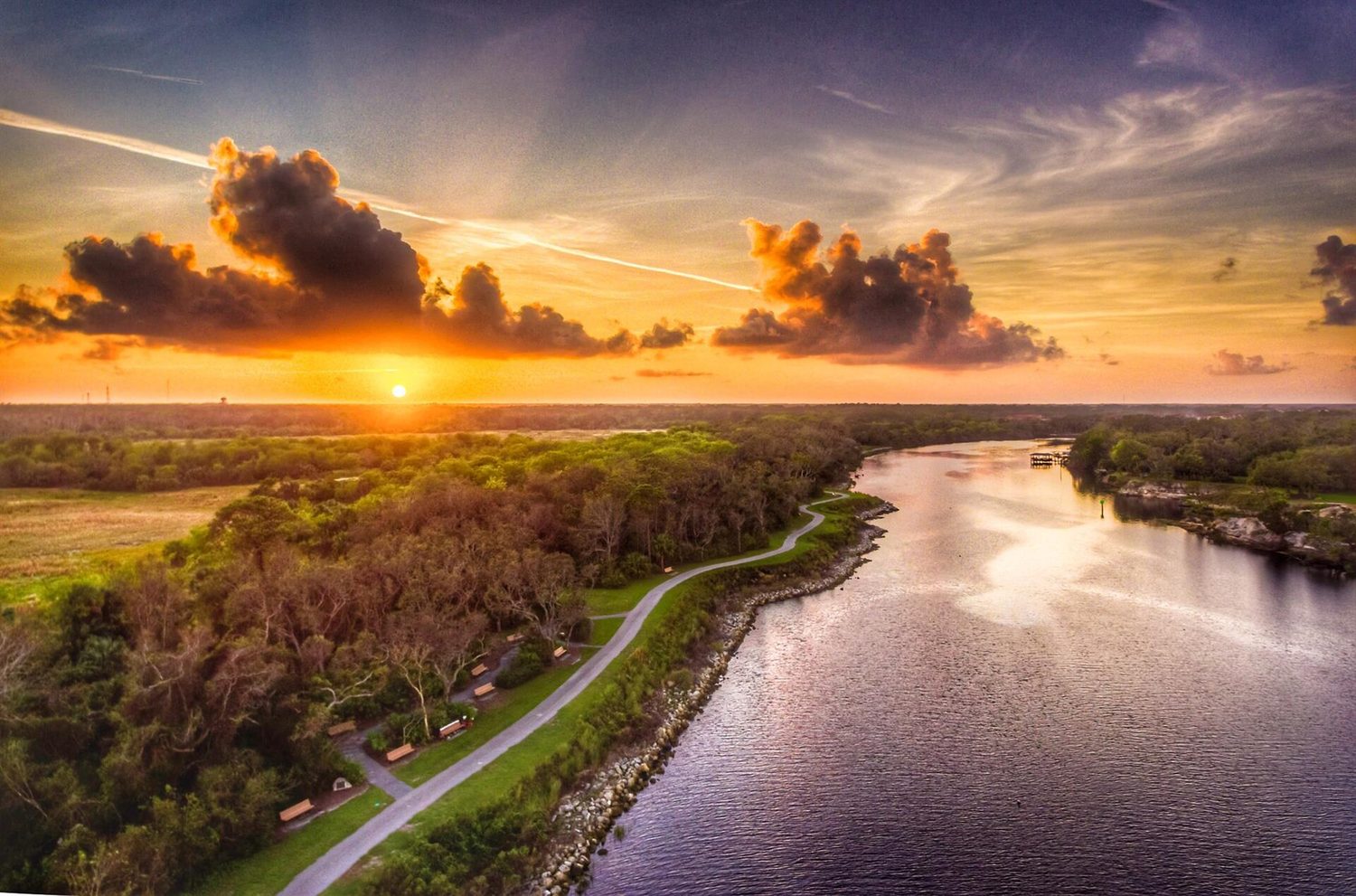
The saltwater network is the more distinctive feature. Those 23 miles are tidal, connected to the Intracoastal Waterway, which forms the city’s eastern edge. Beyond that waterway sits the Hammock, a barrier island that separates Palm Coast from the open Atlantic. The city’s geography is therefore a stack of engineered layers: the canals, the Intracoastal, the island.
That eastern boundary is not just scenery. It defines what Palm Coast is not. The mainland is the product; the Hammock is the buffer. The canals are the plumbing; the Intracoastal is the moat.
What the Census Says Now
The numbers describe a mature, settled place, not a construction site. The population stands at 94,362 people. The median age is 50.8 years, which tells you this is a destination for retirement and stability, not a boomtown of young families.
Housing stock is substantial: 42,472 total units. Of those, 2,766 are held for seasonal or recreational use. That is a modest share, roughly 6.5 percent, suggesting the town is more full-time than part-time. Vacancy sits at 4,215 units, which is a normal churn rate for a city this size.
The economics are solid. Median household income is $71,840. Median home value is $317,200. Median gross rent is $1,747. Unemployment is 3.8 percent. About 28.8 percent of residents hold a bachelor’s degree or higher. None of these figures are spectacular; all of them are respectable. Palm Coast is not a wealthy enclave, and it is not a distressed one. It is a middle-market, planned community that has settled into its own demographics.
The Thirty-Year Gap
The oddity is the timeline. Most Florida planned communities incorporated quickly, or never did. Palm Coast waited. For thirty years, it was a census-designated place with a developer’s logo, governed by county rules and corporate decisions. The residents who bought lots in the 1970s and 1980s were living in a city that did not officially exist.
That changes how you read the place. The canals were dug before the people came. The name was chosen before the first house. The incorporation came last, almost as an afterthought, when the developer’s role had faded and the residents wanted local control.
So Palm Coast is a city in reverse. Most towns start with a settlement, then get a name, then get infrastructure. This one got the name, then the infrastructure, then the settlement, then the legal status. The order matters. It explains why the streets are so regular, why the water management is so deliberate, and why the city feels less like an accident and more like a specification.
A City That Was Always a Plan
The canal mileage is the real monument. Sixty-nine miles of waterways, cut before anyone lived here. That is not a natural feature; it is a land-development decision with a permit number. The saltwater canals are tidal, which means they flush with the Intracoastal’s rhythm, but they are still artificial.
The Intracoastal Waterway itself is the only natural boundary, and even that is a managed channel. The Hammock barrier island sits beyond it, low and sandy, a reminder that the mainland’s engineered order stops at the water’s edge.
Palm Coast is what happens when a corporation decides to build a city from scratch and then the residents decide to make it real. The name is a brand. The canals are a utility. The incorporation is a legal formality that took three decades to complete. It is a town that was a product first, and a place second.
That is not a criticism. It is just the fact of the matter. The grid works. The water drains. The census numbers are steady. Palm Coast is a planned community that finally got around to becoming a city, and the plan is still visible in every canal mile.
Every business named above is one we hold a listing for, and every date traces to a source on our sources page. We do not describe menus, interiors or service we have not verified. Details change — confirm before you travel.